

23 | 04 | 2024 VIEW
-
MPT Partner Videos 2023
We are adding and showcasing some of the videos that our charity partners sent us to celebrate Freddie’s 77th Birthday Weekend in Montreux 2023.
-
Freddie Mercury & Stuart Leathem ft. Esther Trousdale
'Little Freddie Goes To School', released on Blue Vinyl and CD For World AIDS Day on 1st December. All profits go to The Mercury Phoenix Trust.
-
Rami Malek
Rami talks about Freddie’s treasured musical legacy and his ongoing powerful force in AIDS awareness.
(Photo: Mike Rosenthal)
-
Medical Action Myanmar
A look at the vital work of raising AIDS awareness that is being carried out by Medical Action Myanmar (MAM) in some of Myanmar's most deprived areas. A small, but dedicated, team run an ambitious outreach education programme, that is literally transforming lives - all in Freddie's name.
-
Freddie Meter
Can anyone match Freddie Mercury’s legendary voice? Queen and YouTube issue a challenge!
-
Freddie Mercury
This specially compiled tribute to Freddie Mercury was made to celebrate what would have been his 65th birthday, on 5th September 2011. The video features rare and unseen footage seen here for the very first time.
-
Anita Dobson
Anita Dobson speaks about the Mercury Phoenix Trust's support of Indian charity Snehalya.
Snehalya means The Home Of Love and provides Rescue, Rights & Rehabilitation to Women & children. Raising awareness and understanding for people living with HIV is a key part of their work. The Mercury Phoenix Trust supports Snehalya in their incredible task.
-
Robbie Williams
Robbie talks about his persona on stage being geared around Freddie Mercury and why it is important to support the MPT.
Since 1992, The Mercury Phoenix Trust has been raising millions to fight AIDS worldwide and thanks to advances in treatment, many are able to live longer with the disease, but there is still no cure. Around the world, mainly in countries stricken with poverty and lack of education, people are dying. The fight is not over yet.
-
Stephen Fry
"All those close to Freddie, all those who loved him and indeed the wider circle of people who also loved him, which spread across the world, were determined to do something to help make sure that this happened less and less often to people and so the trust was founded to help with education and awareness.
-
Matt Lucas
Queen and Freddie Mercury fan Matt Lucas introduces the Mercury Phoenix Trust message for 2013.
Since 1992, The Mercury Phoenix Trust has been raising millions to fight AIDS worldwide and thanks to advances in treatment, many are able to live longer with the disease, but there is still no cure. Around the world, mainly in countries stricken with poverty and lack of education, people are dying. The fight is not over yet...
-
Bono
Bono reflects on the loss of Freddie “…taken from us all in 1991 – stolen from us actually. This larger than life, dynamic vocal genius – stolen from us…stolen by a little virus, HIV”. He goes on to say, “last year for the first time since AIDS appeared four decades ago more people were put on the treatment than contracted the virus.
“The balance is slowly tipping in the right direction… dreams of a world free of AIDS are no longer just dreams.”
“But…we have to keep up the pressure and one of the ways of keeping up the pressure is by donating to the Mercury Phoenix Trust.”
THE MERCURY PHOENIX TRUST
Following the moving and hugely successful Tribute Concert in 1992, Brian May, Roger Taylor and Jim Beach set up The Mercury Phoenix Trust (MPT) in memory of the iconic Freddie Mercury who died from HIV/AIDS in 1991. The Trust is a core part of rock band Queen and Freddie’s legacy, with the passion and power behind the music forming the bedrock of the MPT.
The MPT has reached millions in the fight against HIV/AIDS worldwide, providing £18M to over 1.8K projects in 57 countries (and counting!). The MPT predominantly funds smaller organizations it assesses and vets as they effectively work at grassroots level, where governments, larger NGOs and markets don’t often reach.
The current MPT overheads are just under 7p in the £/pound, which means that for each pound donated, over 93p goes to funding the work of the global charities FIGHTING AIDS WORLDWIDE - and we intend to keep it that way. In fact, the more that is raised and the more donations we get in, the more our overheads go down.
With an estimated 39M people living with HIV/AIDS and 1.3M more becoming newly infected with HIV in 2021 alone, the battle is far from over.
Freddie was taken from us too young, but there is still time to make a difference and change the destinies of millions around the world.
FREDDIE FOR A DAY SEPTEMBER 5
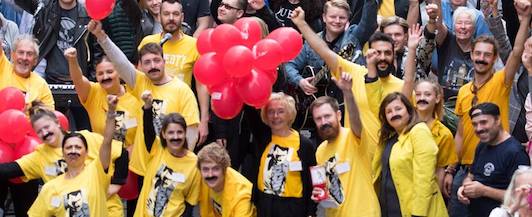
Fans and advocates around the world dress up Freddie style to remember the legend on his birthday and during other times of the year.
We also have a super partnership with Hard Rock Café which ensures people across the globe can Get Ready to Freddie each September!
DO SOMETHING CRAZY TO RAISE FUNDS

The fundraising never stops, and it can be done all year round in the most outrageous of ways.
Run, dance, swim, cycle, rock out, draw or bake cakes, we have even had somebody throw themselves out of a plane (with a parachute!) Any way you do it, just make it fun as you know Freddie would approve!
FREDDIE MERCURY BIRTHDAY PARTY

Each September The Mercury Phoenix Trust throws an annual birthday party in Freddie’s honour in Montreux, Switzerland. You are invited to come and join us!
AUCTIONS AND MERCHANDISE
The Mercury Phoenix Trust often auctions exclusive and one-off Queen memorabilia through eBay. Click here for the latest auction and merchandise.
PARTNERSHIPS
Whether you run a business or you’re a student, there are ways you can partner with us as we reach out. Click here to find out more.
AWARENESS
Come share with us and join the discussion on social media.


Follow us
@the_MPT
Latest UPDATES
12 | 04 | 2024 VIEW
'Man From Manhattan' Painting Auction
08 | 03 | 2024 VIEW
International Women's Day 2024
05 | 02 | 2024 VIEW
The Official Freddie Mercury Birthday Party 2024: SOLD OUT
03 | 02 | 2024 VIEW
The Official Freddie Mercury Birthday Party 2024 - LAST 100 TICKETS!
02 | 02 | 2024 VIEW
The Official Freddie Mercury Birthday Party 2024: PARTY GUIDE
01 | 02 | 2024 VIEW
The Official Freddie Mercury Birthday Party 2024: THANK YOU
31 | 01 | 2024 VIEW
The Official Freddie Mercury Birthday Party 2024: Tickets On Sale Now!
10 | 01 | 2024 VIEW
The Official Freddie Mercury Birthday Party 2024 - On Sale Details
28 | 12 | 2023 VIEW